en
en
 nl
nl

Omafiets buying guide: how to choose a traditional Dutch grandma bike (2026)
What's an omafiets, what size fits, where to buy a good second-hand, and which brands to trust? Complete buying advice plus maintenance tips.
The omafiets — literally "grandma bike" — is probably the Netherlands' most iconic export. Upright, black, reliable, with that distinctive swept-back handlebar and a basket on the front. But behind that seemingly simple design lies surprising variation, and if you buy a second-hand omafiets without knowing what to check, you'll easily pay too much for too little bike. Here's everything you need to know.
🚲 Looking for a second-hand omafiets? Browse verified listings on BikeFair — frame-checked, no surprises.
What is an omafiets, actually?
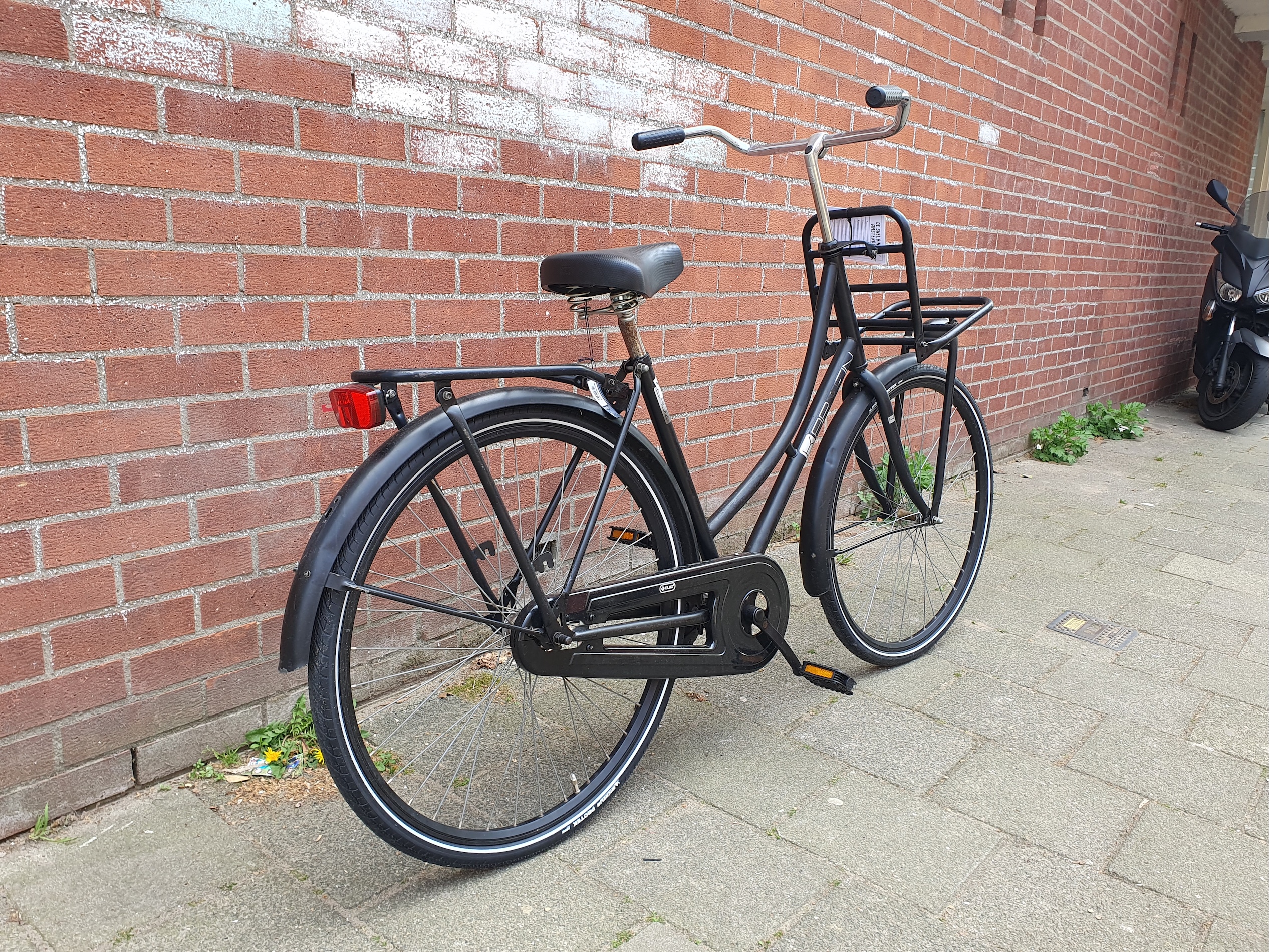
An omafiets is a traditional Dutch city bike with a low step-through frame, upright riding posture, swept-back handlebars, and typically one to three internal hub gears (no derailleur). The name comes from the cliché image of an old lady cycling to the market. In reality, all of the Netherlands rides one — from students to CEOs.
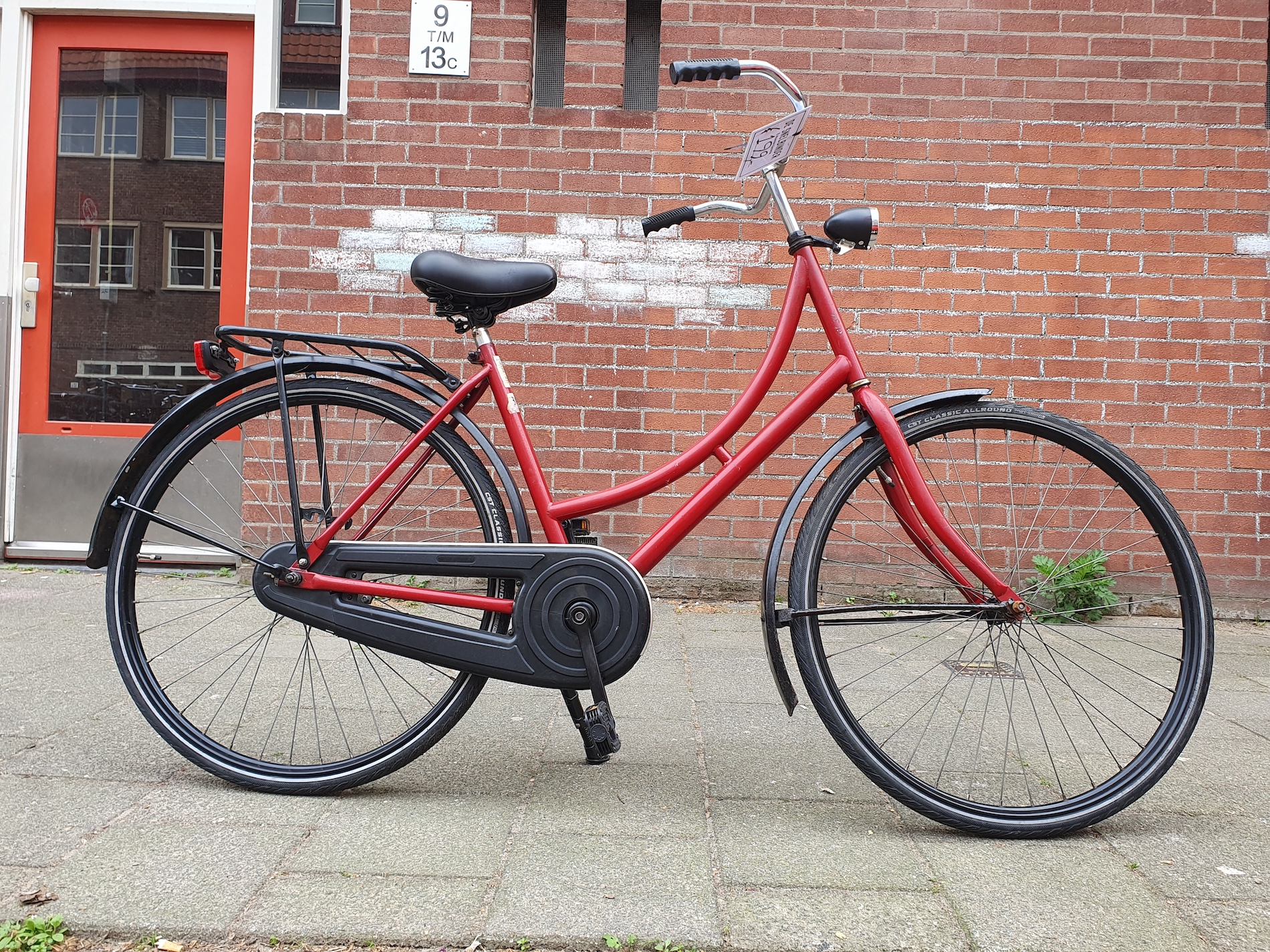
Red women's omafiets with high handlebars for upright riding
What distinguishes an omafiets from a regular city bike:
- Low step-through frame — no need to swing your leg over the saddle. Handy in a skirt, with groceries, or if you simply don't feel like acrobatics.
- Upright riding posture — nice for your back, ideal for city traffic (you see everything).
- Hub gears (Shimano Nexus 3 or 7) instead of a derailleur — less maintenance, works at a standstill.
- Fully enclosed chain case — no oil stains on your trousers.
- Sturdy kickstand — often a double stand for stability with groceries.
- Rear rack + ring lock as standard — they just belong on the bike.
💡 Difference from a "herenfiets" (men's bike): an omafiets has no top tube (open step-through), a herenfiets does. That's the main functional difference.
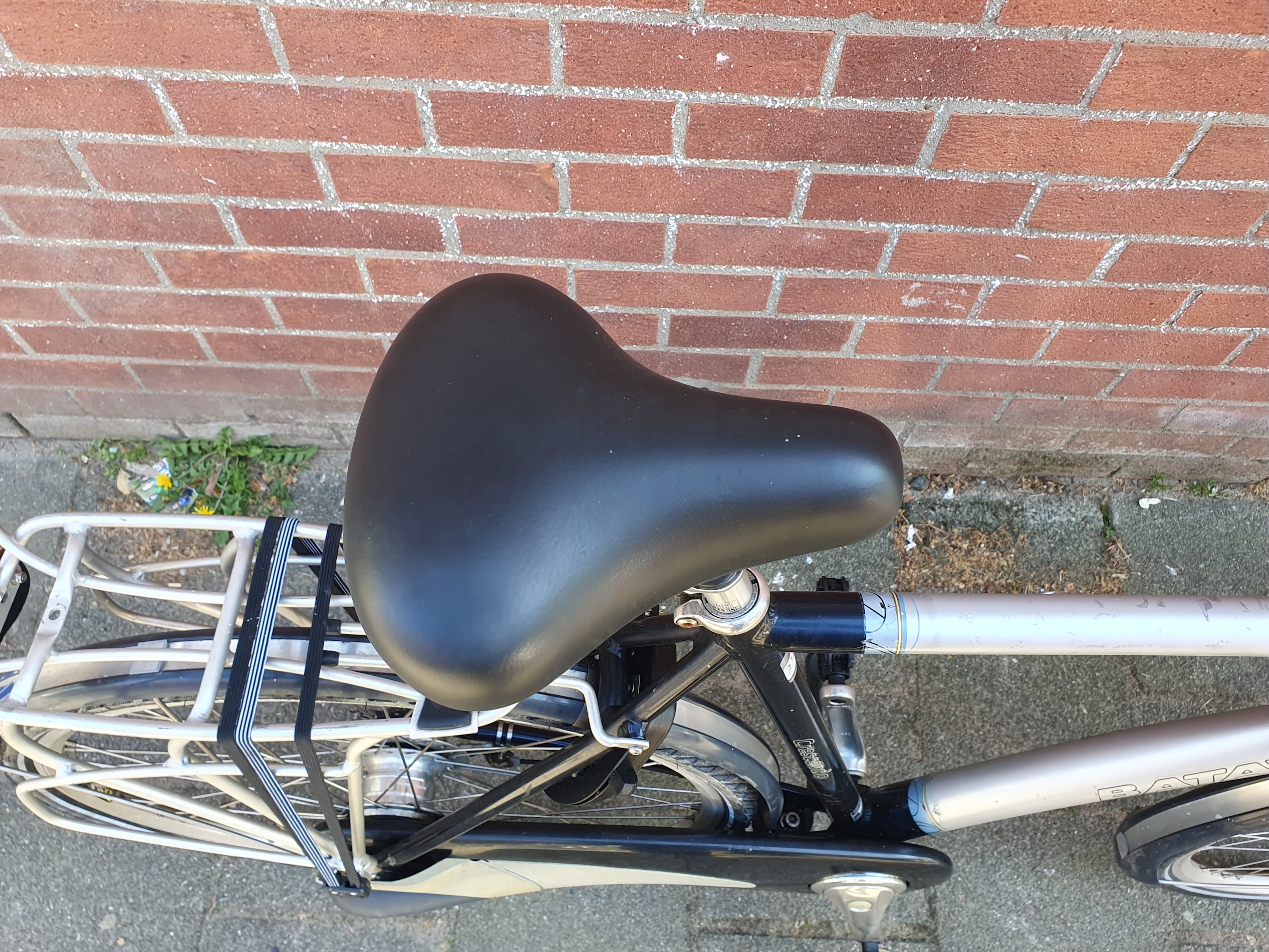
Elastic strap (snelbinder) on the rear rack of an omafiets
Omafiets vs. other classic Dutch bikes
What size omafiets fits me?
An omafiets is more forgiving on size than a road bike — the upright posture makes a 2–3 cm difference less noticeable. A rough guideline:
For a more precise sizing: see our frame size guide.
🚲 Tip: if in doubt, go a size smaller, not larger. A too-large omafiets is awkward at a stop — you have to jump off the saddle — while a slightly too-small bike just gives you a mildly bent knee.
The best omafiets brands (and what sets them apart)
A handful of brands dominate the Dutch market — each with its own reputation and price point.
- Gazelle — the premium standard. Models like the Esprit and Tour Populair are the classics. With maintenance, they easily last 20+ years. Second-hand rarely under €200. See our Gazelle buying guide.
- Batavus — direct Gazelle competitor, comparable quality and price. Old Dutch is the iconic line.
- Cortina — more modern design, often with retro colours (mint, coral, cream). Popular with students and younger riders.
- Sparta — solid mid-range, often on sale. Good entry point if you don't have a Gazelle budget.
- Union — historic brand, less visible today but older models are reliable.
- Anonymous chain-store bikes — Action, Lidl, Hema. Avoid second-hand: low price but parts are hard to source.
More on Dutch brands: see The best Dutch bike brands.
Buying a second-hand omafiets: what to check
The beauty of an omafiets is that it's simple. No carbon frame, no electronic gears — fewer things to go wrong. But always check these four:
1. Frame and paint
An omafiets is usually steel. Strong and easy to repair, but it rusts. Check:
- Top of the rear rack (rainwater collects there)
- Underside of the frame (under the crank case)
- Front and rear fork where the wheels mount
- Weld seams — surface rust is fine, rust-through is not
💡 Tip: a bit of surface rust on a 10-year-old omafiets is no problem. Paint bubbles that feel "soft" = rusted through. Walk away.
2. Hub gears (Shimano Nexus 3 / Nexus 7)
The Shimano Nexus is the standard. Test:
- Shift gears while standing still (a healthy hub does this fine)
- While riding, run through all gears — no clicking, no skipping
- Nothing should leak from the hub axle
A broken Nexus 3 costs €60–€100 to replace incl. labour. A Nexus 7 is more expensive (€120–€180). Factor that into the price.
3. Chain case and chain
A fully enclosed chain case is comfort, not luxury. Check:
- Chain case is firmly mounted (no rattling)
- Chain sounds quiet and rolls smoothly — no "chunk chunk"
- No oil leaks on the case or on the seller's jeans
A new chain costs €15. A new chain case €30–€50 incl. labour.
4. Brakes
Omafietsen often have a coaster brake (in the rear hub, combined with the gearing) plus a hand brake on the front wheel. Check both:
- Coaster brake: pedal backwards — should engage immediately.
- Hand brake: fully engages in lowest position, still has 2 cm of free play in highest position.
A broken coaster brake = hub replacement = expensive. A broken hand brake = €15 fix.
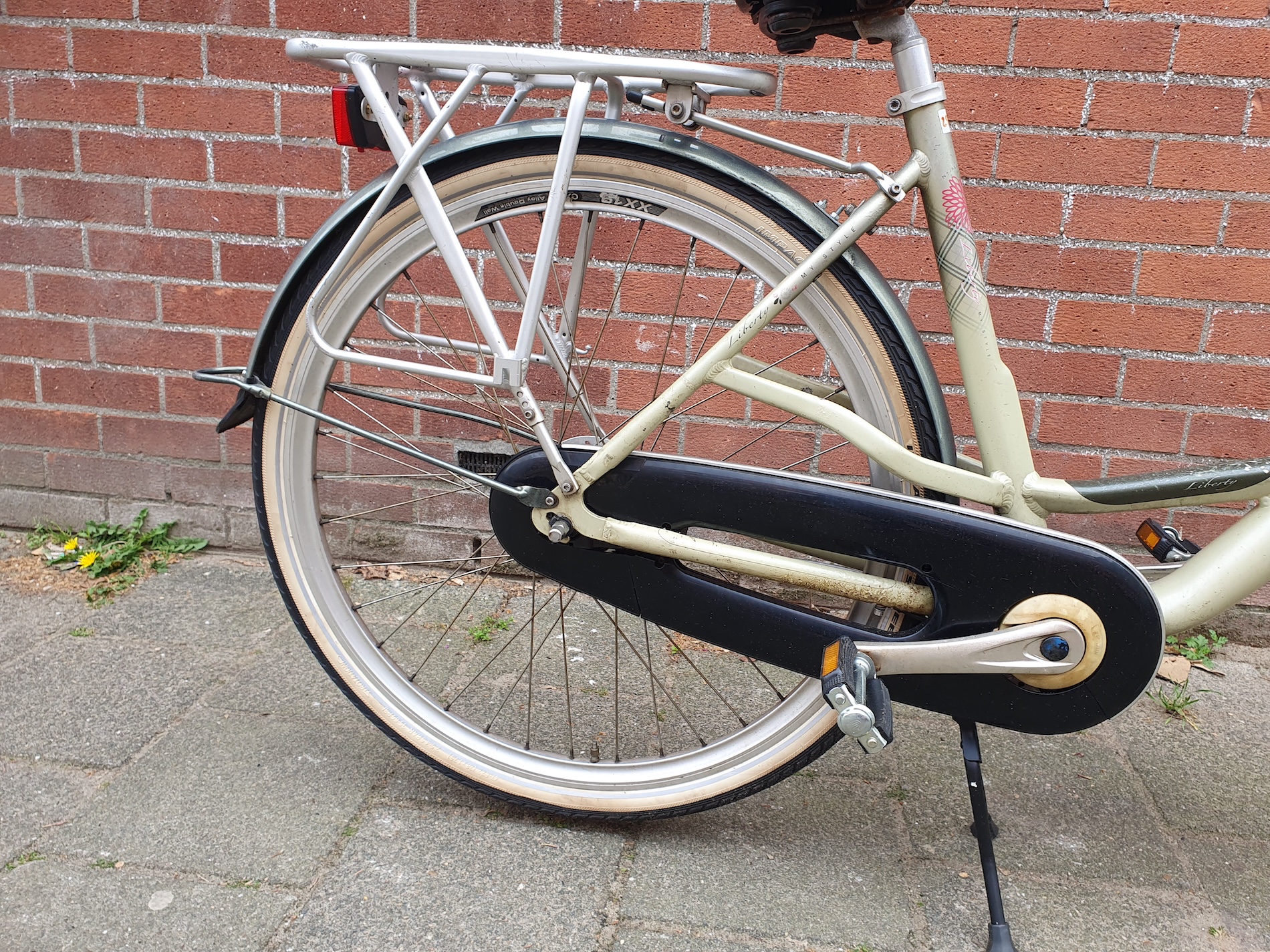
Close-up of an omafiets's fully enclosed chain guard
How much does a good omafiets cost?
Worried about theft?
Honest answer: omafietsen are a popular theft target (80,000+ reports per year). But you can lower the risk:
- Two locks: ring lock (for quick stops) + heavy chain or U-lock (for long stops, through the frame to a fixed object). Read our lock guide.
- Register your frame number with BikeFair (free).
- Don't park the prettiest bike at a hotspot — a 5-year-old Gazelle near the station draws less attention than a new Cortina.
- Get insurance if value >€300 — a separate bike module on your household insurance.
Omafiets maintenance: what do you actually need to do?
An omafiets is forgiving in maintenance — but don't ignore it entirely:
- Tyres: pump monthly (2.5–3 bar). Prevents flats from poor running.
- Chain: oil every 3 months (specific bike-chain oil).
- Hub: check at a bike shop every 2 years (€20).
- Paint: treat damage immediately with a touch-up pen (€5 at Gazelle/Batavus).
- Ring lock: lubricate every 6 months with lock lubricant — see our ring lock installation guide.
🚲 Just want a good second-hand omafiets without the homework? Browse omafiets listings on BikeFair — every bike is checked for condition and frame number.
FAQ
What's the difference between an omafiets and an opafiets? An omafiets has an open frame (low step-through), an opafiets (men's bike) has a top tube. Otherwise functionally similar.
How long does an omafiets last? With maintenance: 20+ years for a Gazelle, Batavus or comparable premium brand. Cheaper bikes 8–12 years.
What's a fair price for a second-hand omafiets? €150–€300 for a 5–10-year-old Gazelle/Batavus in good condition. Under €100 = likely problem or theft risk.
Which omafiets is best for a tall person? Gazelle Tour Populair or Batavus Old Dutch in 61 cm or 65 cm frame size — both designed for taller riders.
Can I get an omafiets with electric assist? Yes — Gazelle and Batavus make e-omafiets models. Second-hand from €700, new from €1,800.